How to sew knitwear on a regular sewing machine: secrets for perfect seams

Are you sewing knits but getting stretched seams and skipped stitches? My Janome can handle even fine knits—I’m revealing some tried-and-true life hacks from the manufacturer. Check out the mini-guide “Machine Settings for Knits” at the end of the article!
A sewing machine is a great helper and has many capabilities. Mine, though simple, can do a lot. I needed to sew a knitted item, so I wondered how to sew knitwear on a Janome sewing machine. That’s exactly what I have.
While searching for an answer, I came across the official Janome website and found very detailed answers to my questions on how to sew knitwear.
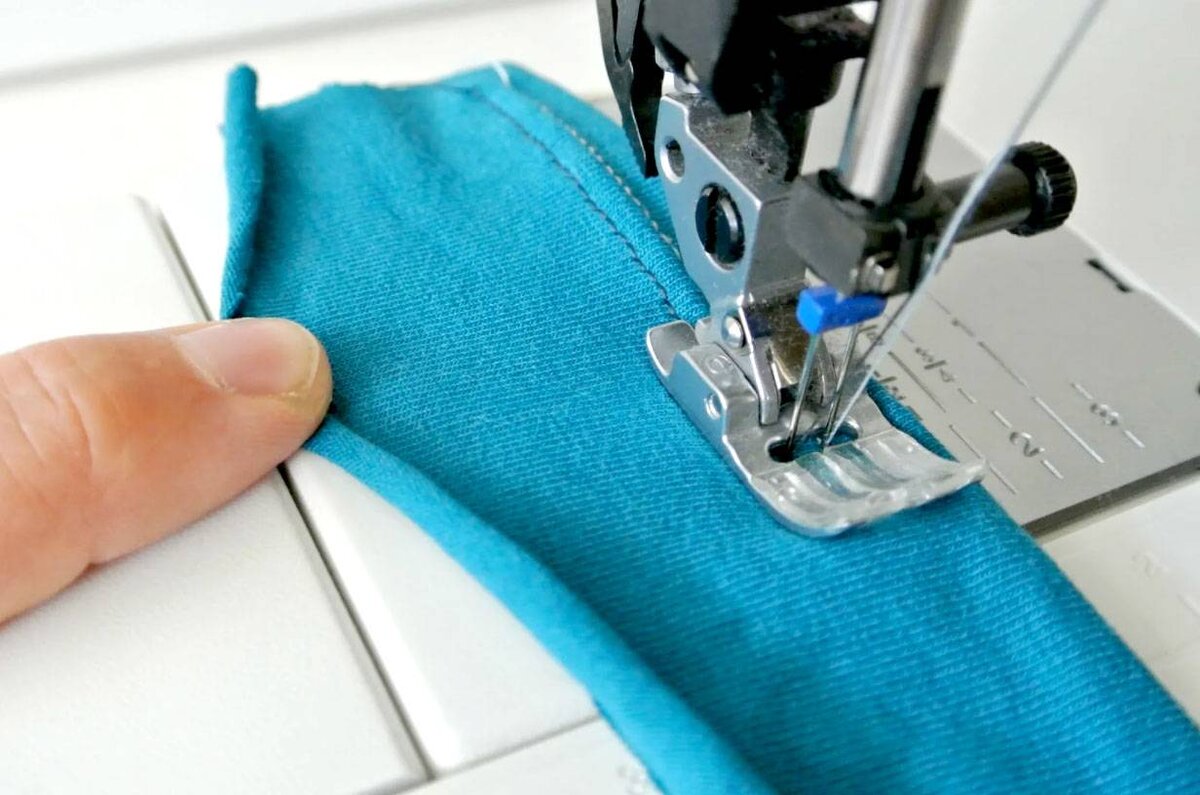
Perhaps they will be useful to someone else too.
Everyone loves knitwear. It’s comfortable to wear and feels soft to the touch.
If someone told you that sewing knits is difficult because the sewing machine skips stitches or stretches the sewn edge, don’t believe them.
Creating knitwear can be fun and quite easy, all you need to do is follow a few tips. These tips will make sewing sweatshirts and even thin knits a breeze.
The first piece of advice for sewing knitwear on a regular machine concerns choosing the right needles; this is perhaps the most important point. The right needles are the most important condition when sewing knitwear.
Another very important point is the correct stitches and their adjustments, as well as presser feet, which will greatly help you achieve a beautiful stitch without skipping. At the very end, you’ll find information on the effect of presser foot pressure on sewing knits.
Needles for sewing knitwear : which ones to choose and why it’s important
TOP 3 needle mistakes (and how to avoid them):
-
Regular needle → tears fibers.
-
Thick needle for thin fabric → skipped stitches.
-
Blunt needle → “chewed” stitch.
Solution :
-
Janome Stretch needles (75/11 for thin, 90/14 for thick).
Choosing the right needles when sewing knitwear is crucial. Specialized needles for sewing knit fabrics have a small ball at the tip that passes easily between the fibers of the knit fabric without damaging its structure.
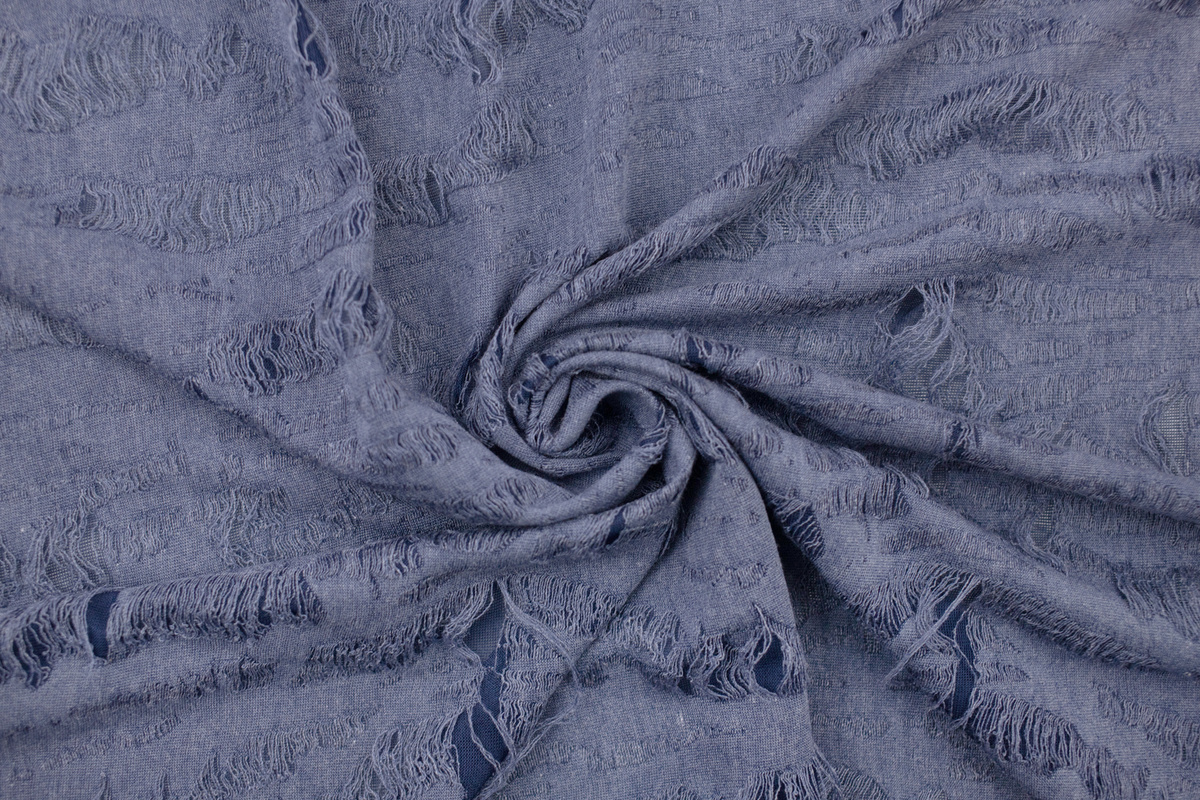
You can see the effect of an incorrectly selected needle in the photo below, where damage to the fabric (holes) is clearly visible.
The photo below shows the effect of using a poorly selected needle or a low-quality needle.
Moreover, the special needle shape allows it to work very close to the looper. This makes it easier for the machine to tie off threads while sewing. Therefore, the risk of skipped stitches will disappear or become less frequent, and when combined with special presser feet, it will be completely eliminated.
Please note that needles for knitwear come in both single (for regular sewing) and double (for hemming).
Tip: Choose the needle thickness proportional to the thickness of the knitwear: needles for sewing thin knitwear, such as jersey, are 75, and for sewing thick knitwear, such as blouses, are 90).
With these tips, you’ll always create the perfect stitch on any knitted fabric.
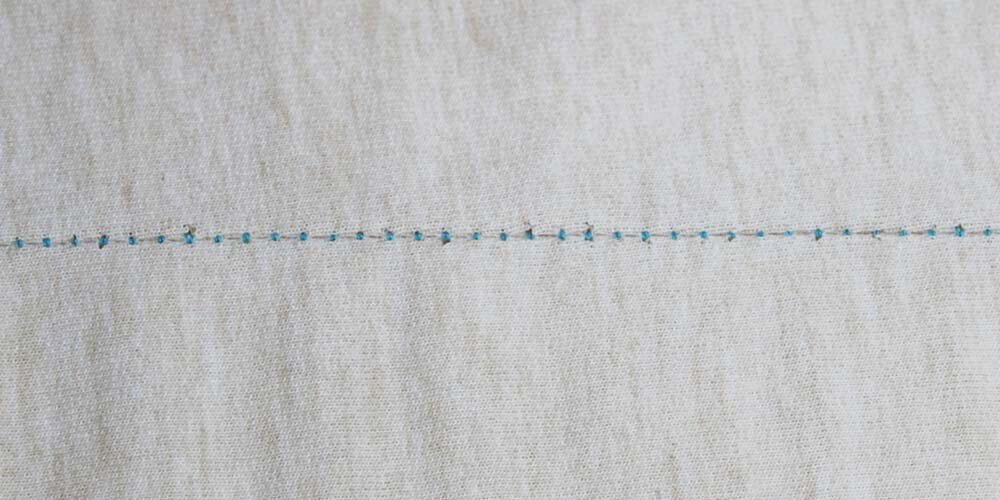
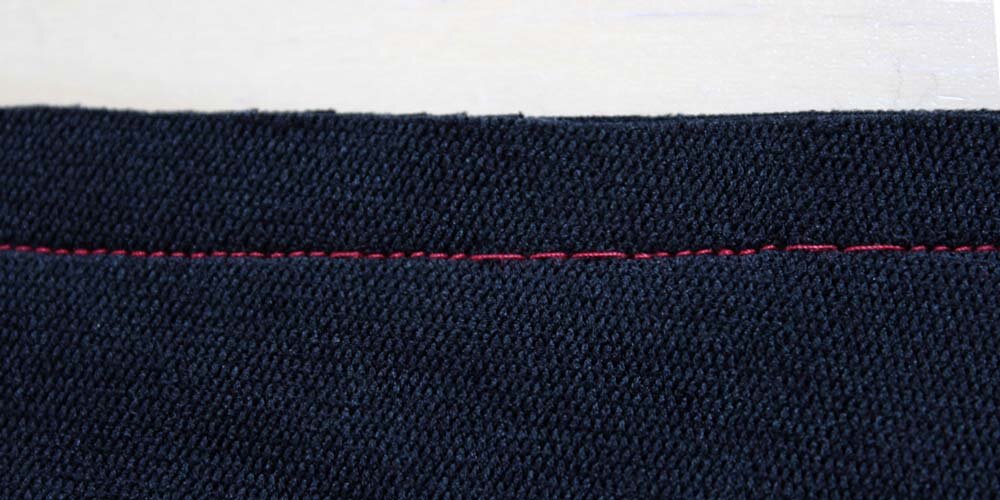
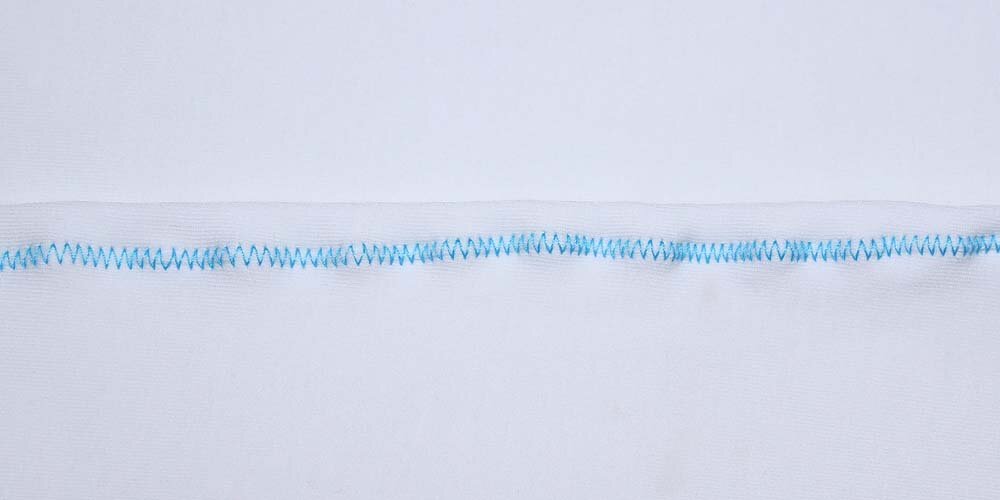
The photographs below highlight stitches that, due to their flexibility, are ideal for sewing knits and stretchy materials.
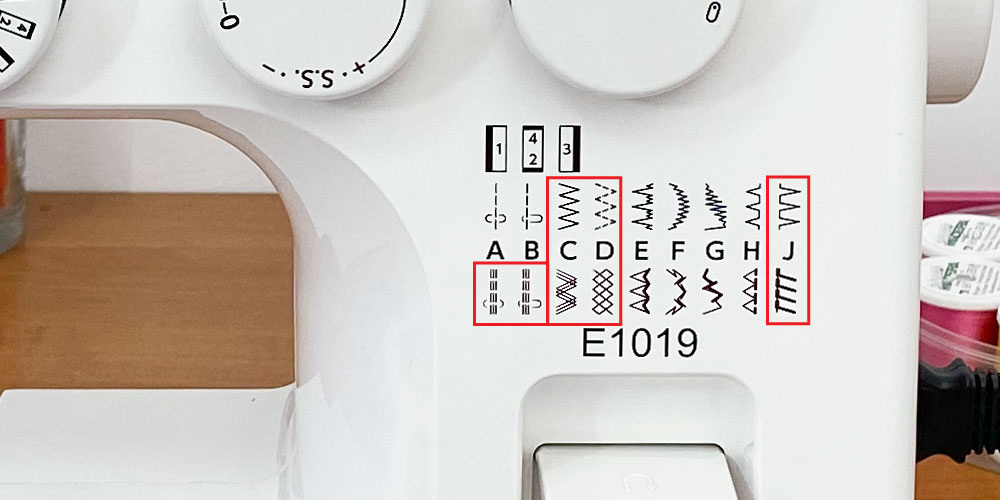
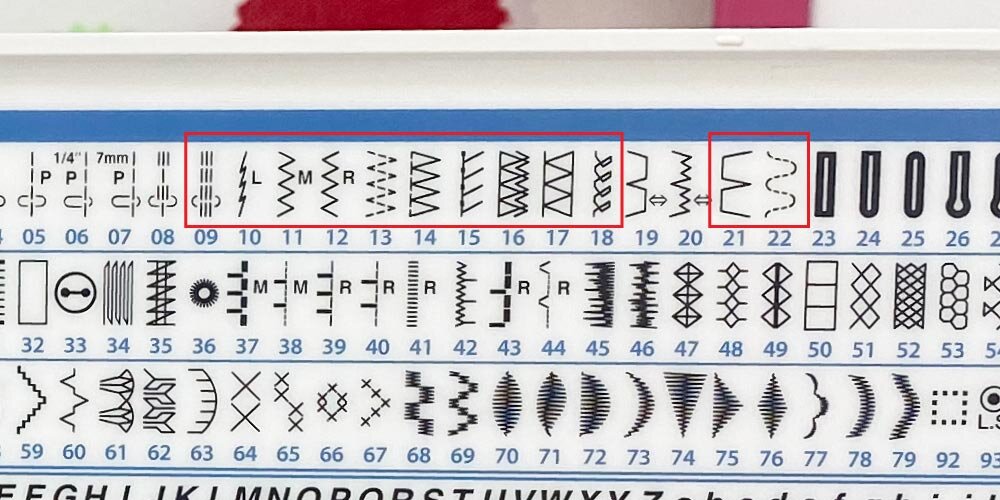
Using the right stitch is half the battle, because to ensure the stitch adheres well to the fabric, you need to adjust its parameters, i.e. adjust the length, width of the stitch, and the tension of the upper thread.
We want the stitch to not pull the edges of the fabric and to be aesthetically pleasing.
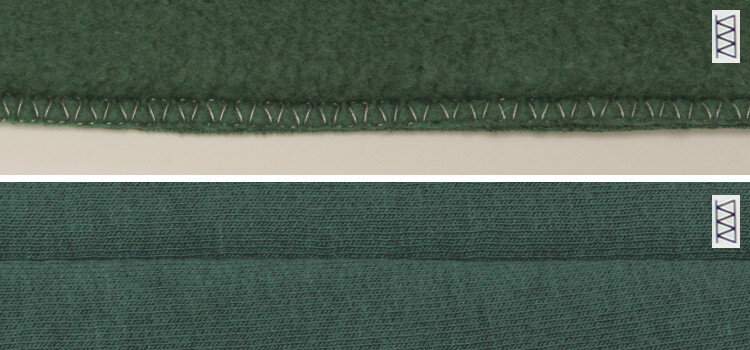
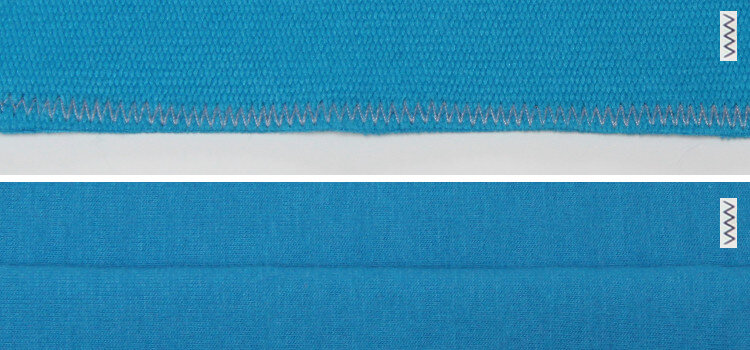
Tip: To achieve a beautiful overlock or zigzag stitch when overcasting knit fabric, remember to sew 1 cm from the edge of the knit fabric, not right at the edge. Trim off any excess material after sewing.
Knitwear Sewing Feet: How to Sewing Without Stretch
When sewing knitwear, specialized presser feet are very helpful and often even necessary:
-
They will help transport the material, and therefore reduce the effect of stretching the sewn edge of the knitted fabric – such stretching will make the sewn item unsuitable for use;
-
eliminate skipped stitches,
-
They will make the sewn edge of the fabric even.
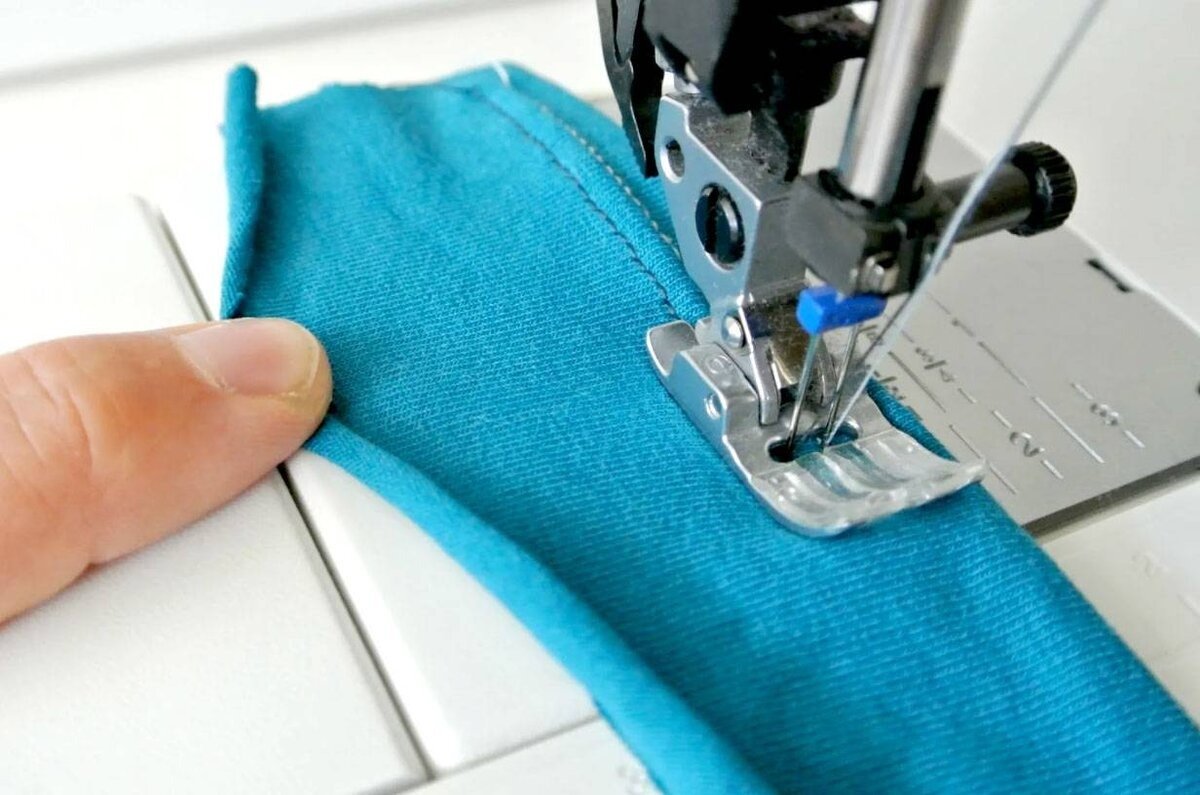
Invisible Foot for Knitwear
How it works : The rubber pad gently presses the fabric without distorting it.
Where to buy : Any sewing supply store ( search for “Janome knitwear foot” ).
Lifehack : Don’t have a special foot? Place a strip of paper under the fabric and then carefully remove it!
Each of the specialty feet has its own strengths and will be useful for a specific task, stitch, or type of knitwear.
This means you’re sure to find a foot that will help you with your project!
List of presser feet useful for sewing knitwear:
-
foot for sewing delicate fabrics and knitted fabrics,
-
overlock foot,
-
top feed foot
-
Straight seam foot.
Descriptions of the individual presser feet and their uses can be found below.
Foot for sewing delicate fabrics and knitwear.
This is probably the best foot for sewing knitted fabrics, especially thin, stretchy and problematic ones!
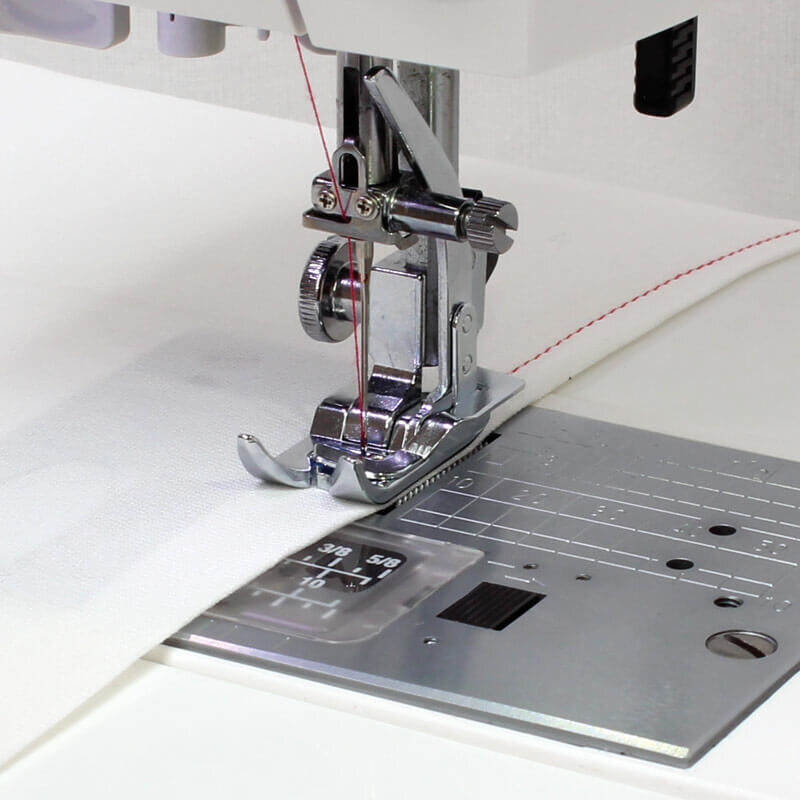
The foot features a movable lever with a rubber cap that holds the fabric close to the needle while sewing. Using special needles and this foot minimizes the risk of skipped stitches.
This foot allows you to sew with various stitch widths up to 5 mm and twin needle stitching (up to 4 mm between needles). In addition to sewing knits, it is also useful for working with woven fabrics, especially if you’re sewing with delicate fabrics like silk, georgette, and others.
Overlock foot
Another interesting foot useful for sewing knits is the overlock foot. This foot is designed for joining knit fabrics. The stitch is created on the needles or the shaft (depending on the foot version).
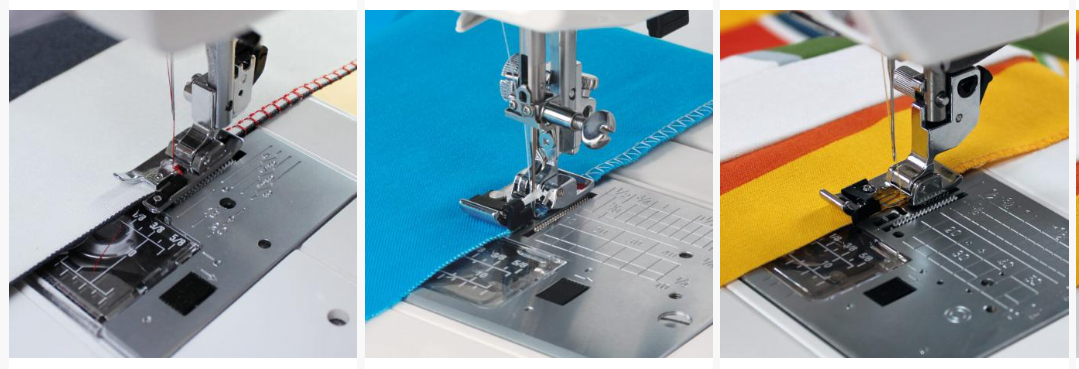
This creates a precise stitch even on flexible fabrics like jersey (fine knits). It’s perfect for sewing leggings, skirts, T-shirts, cuffs, and more.
A major advantage of this foot is that it can also be used for sewing fabrics.
Upper feed foot
This is another useful foot that can be successfully used for sewing knits. The teeth on this foot work with the needle bar during sewing. They rise above the fabric and then lower, holding it in place as it moves.
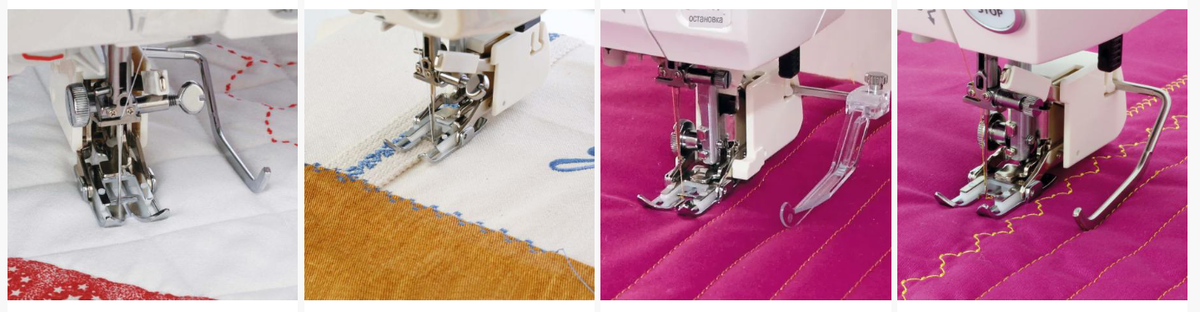
This procedure significantly improves material handling. It ensures that the stitched layers are fed evenly, preventing the edge of the knitted fabric from stretching (unraveling) after stitching. This is what such a stretched edge looks like in the photo.
If your sewing machine doesn’t have manual presser foot pressure adjustment, a dual-feed foot will allow you to sew many fabrics comfortably. Be sure to check out the full description.
The advantage of this foot is that it can be used for sewing fabrics, leather, artificial leather and PVC.
Adjustable presser foot pressure is a practical feature when sewing knitwear.
Adjusting the presser foot pressure on a sewing machine is one of the most useful features when sewing knits. Knits often stretch excessively during sewing.
To avoid this, we need to reduce the pressure of the presser foot on our sewing machine; this will ensure smooth movement of the fabric and a perfect, aesthetic stitch.
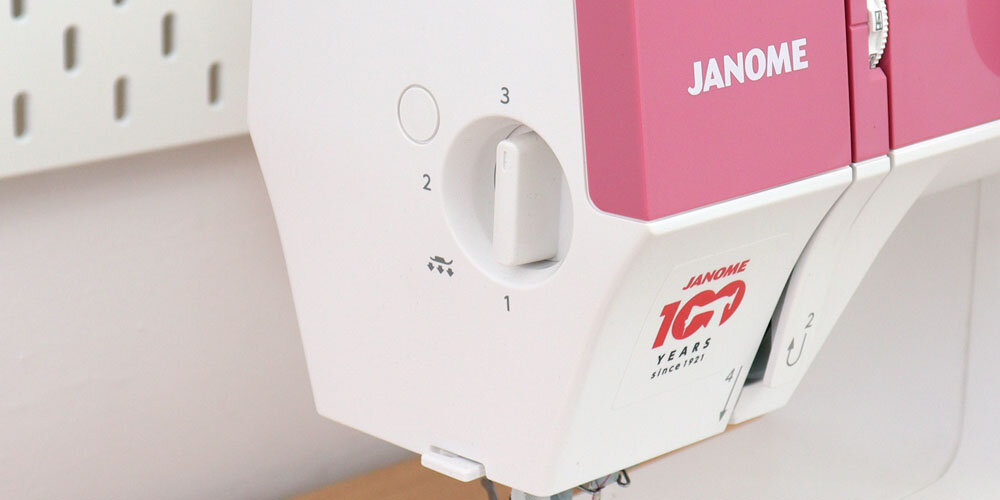
What should I do if my machine does not have a presser foot pressure adjustment?
Then we’ll have to use a few tailoring tricks.
One solution is to glue all the edges of the knitted fabric, or more specifically the seam lines, with interlining. This treatment will reduce the stretch of the stitched fabric.
The second option is to carefully feed more material under the presser foot, as if inserting it. This must be done carefully to avoid overlapping when sewing. An example of insertion is shown in the photo below.
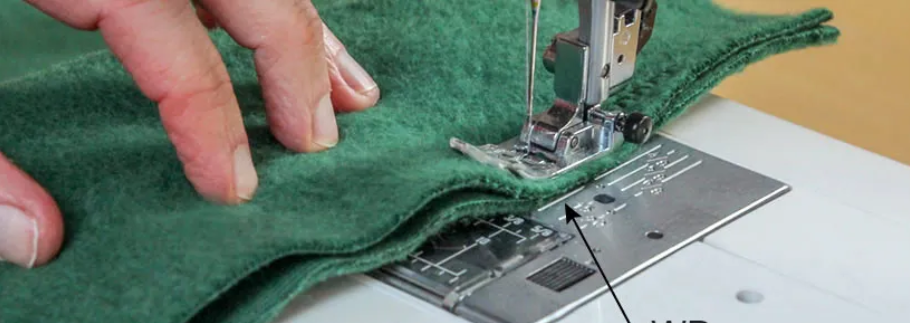
After sewing, of course, we iron the seam to give it its final shape and eliminate delicate seam wrinkling.
Machine settings (secret checklist)
5 settings for the perfect seam :
Thread tension : 2–3 (for most knits).
Stitch length : 2.5–3 mm.
Foot pressure : minimum.
Speed : medium.
Needle : always new!
I hope you’ve realized that sewing knitwear isn’t much more difficult than sewing fabric. You just need to remember to use the right needles and special feet, and you’re sure to succeed in any sewing project, even the most ambitious!
Problems and solutions
Why does the seam stretch?
The upper thread is too tight → How to fix: Loosen the tension .
The fabric is slipping → Try a dual feed foot .
The needle is old → Replace it before starting .
“Quick Settings Checklist” (save it for yourself!):
-
Needle : Janome Stretch 75/11 (for fine knitwear).
-
Stitch : Narrow zigzag (width 2 mm, length 2.5 mm).
-
Thread tension : 2-3.
-
Life hack : Before sewing, stitch on paper to check the tension.
If you found this article interesting and useful, I’d appreciate any support! Your tips will help me create more high-quality content and share inspiring ideas.
Thank you for your attention and support!